I used Decopy AI Humanizer to rewrite AI-generated content, but the results still sounded robotic and didn’t pass as natural writing. I’m trying to figure out if I’m using it wrong or if the tool just isn’t that reliable. Looking for real Decopy AI Humanizer reviews, tips, or better alternatives because I need content that sounds human and reads smoothly.
Decopy AI Humanizer
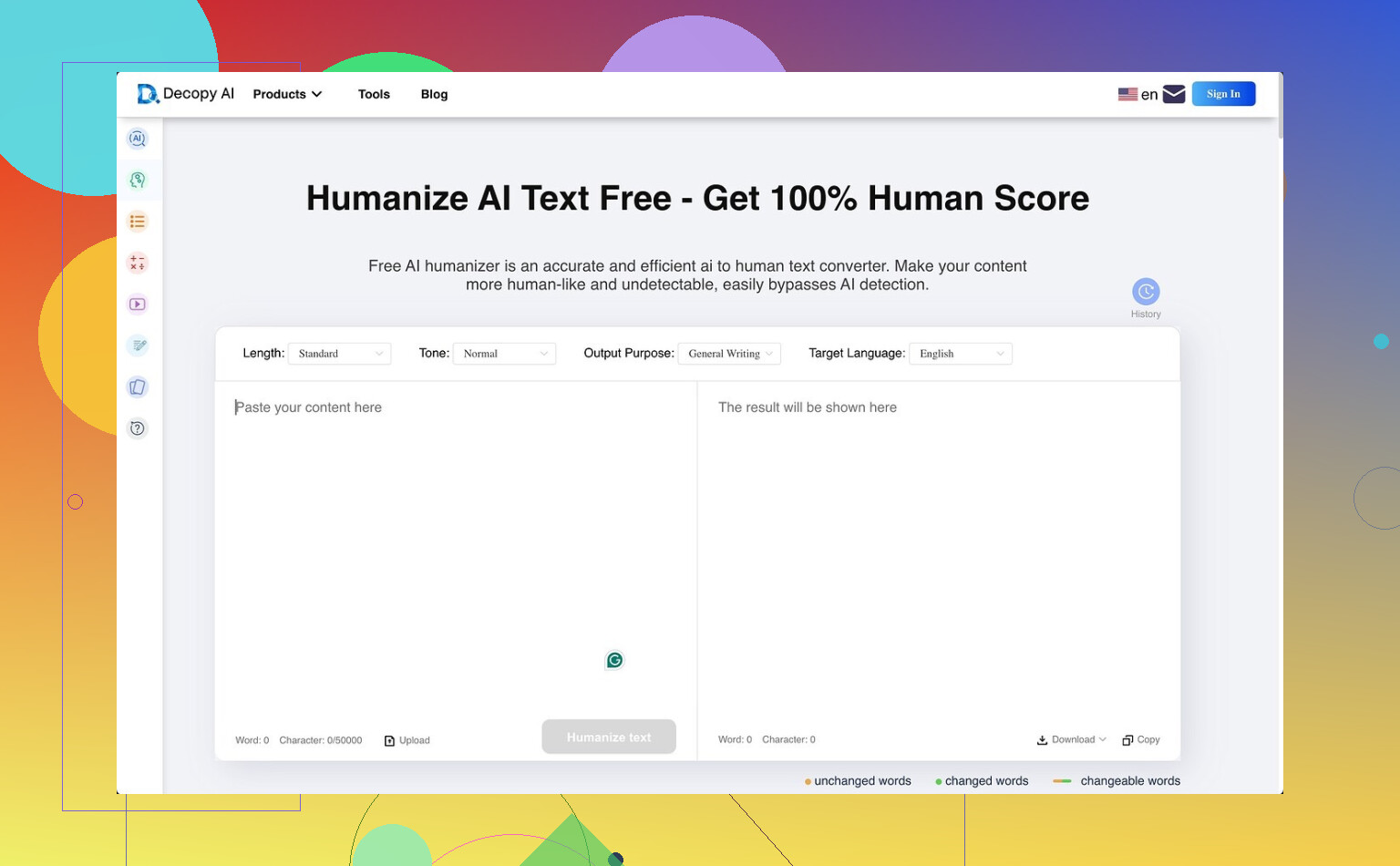
I spent some time with Decopy AI Humanizer, and on paper it looks kind of absurdly generous. You get 500 free runs. Each request accepts up to 50,000 characters. There are eight tone options, nine purpose presets, and a sentence-by-sentence redo tool for lines you want to swap out without rerunning the whole block. So yeah, the free tier feels big. The part that fell apart for me was detection.
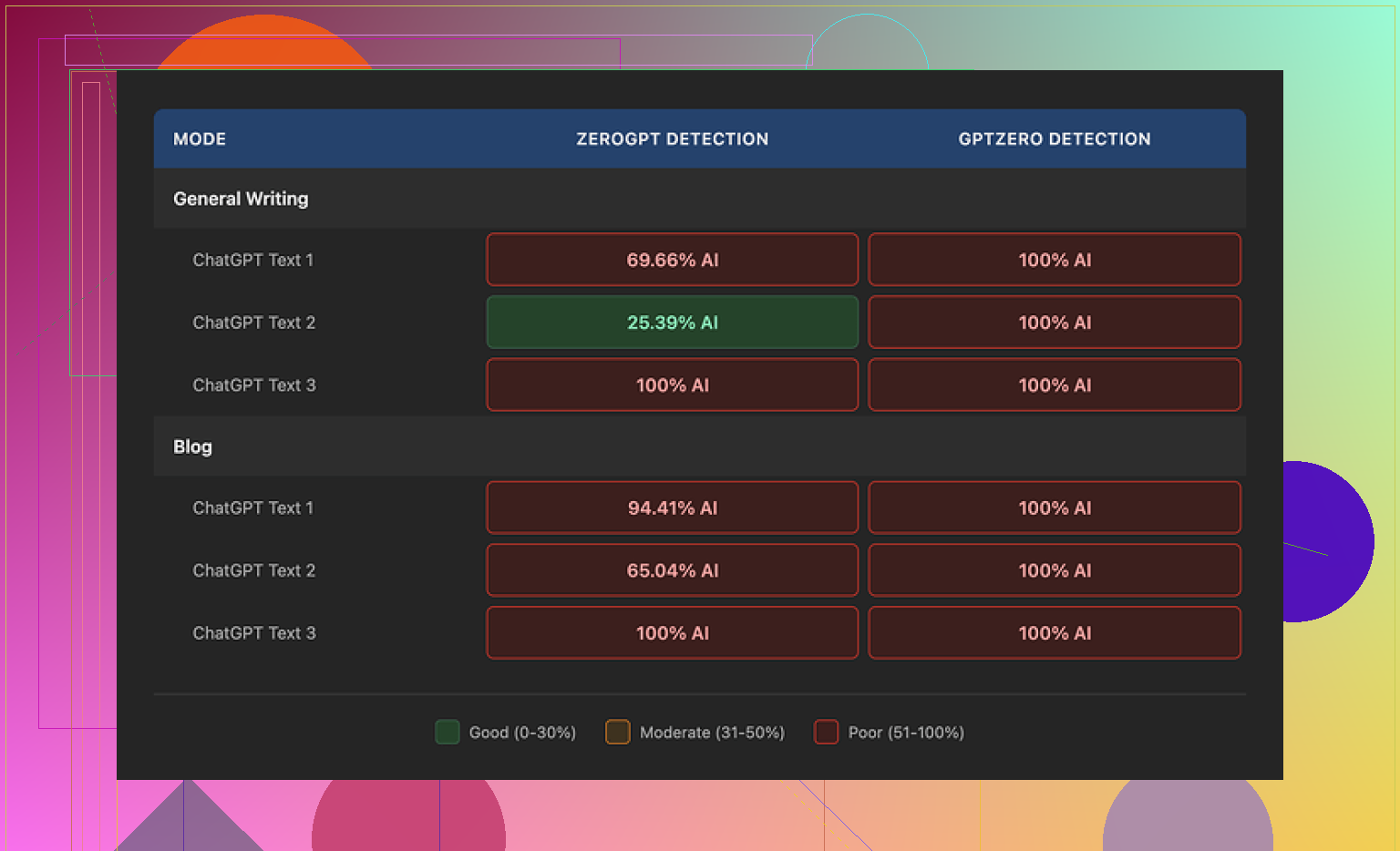
My test outputs got flagged hard. GPTZero marked every sample as 100% AI, both in General Writing and Blog mode. ZeroGPT bounced around more, roughly 25% up to 100% depending on the passage, so the results were less fixed there, but still not good if your goal is getting past detectors.
One thing I did notice, it usually kept the grammar clean. I didn't see the weird breakage some other tools throw in, and that puts it ahead of stuff like UnAIMyText and HumanizeAI.io on basic readability. I’d put Blog mode around 7/10 for output quality, and General Writing a bit higher at 7.5/10. Still, both modes flatten the text too much. Blog mode especially felt like it was written for a little kid. General Writing was less awkward, but I still got phrases like 'digital stuff' and 'totally changing tech,' which reads off in most serious contexts. At least it didn’t butcher length. The rewritten version stayed close to the input size, which helped when comparing drafts.
I also checked the privacy side because tools like this tend to stay vague. Decopy’s policy gives a defined retention period of three months and says it follows GDPR and CCPA. What I did not find was a clear explanation of what happens to the exact text you paste in for rewriting, which mattered more to me than the compliance label.
After running the same kind of controlled tests elsewhere, Clever AI Humanizer gave me stronger humanization results and didn’t cost anything.
I don’t think you’re using it wrong. Decopy tends to rewrite at the surface level. It swaps words, smooths grammar, and keeps the same rhythm. Detectors often flag rhythm more than vocab, and human readers notice it too. That’s why it still feels robotic.
I differ a bit from @mikeappsreviewer on one point. Clean grammar is not always a plus here. Perfect grammar plus even sentence length often screams AI.
What helped me was treating it like a draft cleaner, not a humanizer. I’d do this:
Paste shorter chunks, 150 to 300 words.
Pick one tone and stick with it.
After output, change the first and last sentence by hand.
Add one specific detail, example, or opinion per paragraph.
Break one sentence into two, then merge two others.
Leave a tiny bit of imperfection. Not sloppy, just less polished.
If your goal is “undetectable,” Decopy is hit or miss. If your goal is faster editing, it’s ok-ish. For natural writing, manual passes still matter. Kinda annoying, but yeah, taht was my experince too.
I don’t think you’re using it wrong. Decopy just seems inconsistent, and that’s me being nice about it.
What stood out to me is that it tends to ‘normalize’ everything. The wording gets safer, cleaner, flatter. That can help if your original draft is messy, but it also strips out the little quirks that make writing feel human. So the text ends up readable, yet still weirdly lifeless. That robotic vibe is usually from predictability, not just bad phrasing.
I slightly disagree with @shizuka on the imperfection part though. Random roughness alone won’t save it. If the structure still follows that same AI cadence, detectors and actual readers still pick up on it fast. And I also think @mikeappsreviewer was right that Decopy is decent at cleanup, just not at transformation.
Biggest issue for me: it doesn’t really change the underlying thought pattern. It rewrites sentences, but not the logic flow. Human writing usually wanders a bit, emphasizes odd things, cuts corners, doubles back, makes small judgment calls. Decopy mostly doesn’t do that.
So yeah, for polishing? fine-ish. For sounding natural? pretty hit or miss. If every output feels robotic, that’s probly the tool, not you.
I’d put it this way: Decopy AI Humanizer is better at laundering tone than changing voice. That sounds similar, but it isn’t.
What @shizuka and @techchizkid are getting at is true, though I’m a little less convinced that sentence-level tweaking alone fixes the problem. If the original draft has that tidy AI logic underneath, Decopy mostly preserves it. And @mikeappsreviewer is right that the output is usually clean. Clean just doesn’t equal human.
Pros for Decopy AI Humanizer:
- generous free usage
- large character limit
- readable output most of the time
- useful if you want a quick rewrite, not a deep rewrite
Cons:
- keeps the same argument flow
- tends to flatten personality
- can sound overly balanced and predictable
- inconsistent against detectors
- privacy clarity still feels incomplete
My take: test it on writing that already has a strong personal angle. If Decopy strips that out, the tool is the issue. If it preserves your quirks, your input may just be too generic. That’s the easiest way to tell.
I also wouldn’t chase “undetectable.” That usually makes writing worse. Better target believable. For that, a tool like Clever AI Humanizer can help readability, but I’d still judge by whether the paragraph sounds like something you’d actually say out loud. If not, it’s not there yet.