I’ve been testing the Monica AI humanizer for rewriting and polishing content, but I’m not sure if it’s actually safe and effective for long‑term use. I’m worried about detection, originality, and whether it really sounds human to different audiences. Can anyone share real experiences, pros and cons, and tips on using Monica AI humanizer the right way?
Monica AI Humanizer review, from someone who wanted it to work and watched it faceplant.
Monica AI Humanizer link: Monica AI Humanizer Review with AI-Detection Proof - AI Humanizer Reviews - Best AI Humanizer Reviews
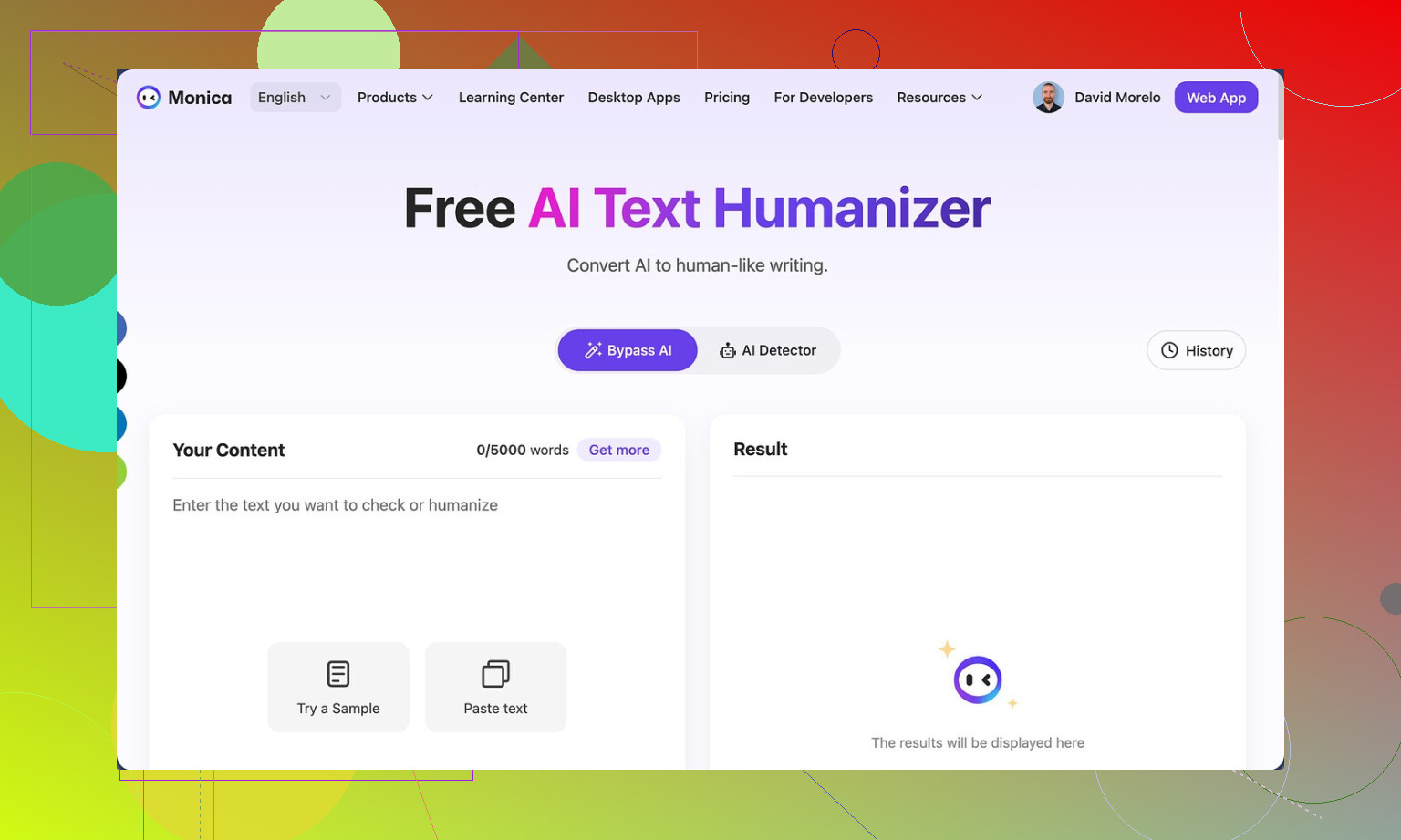
Monica is sold as an “all in one AI” thing, and the humanizer feels like a small extra stuck on the side. That shows pretty fast once you start testing it.
Monica gives you one button. You paste text, hit the button, and that is it. No tone options. No “make it more casual” slider. No “light / medium / heavy” mode. No rephrasing styles. If the output trips detectors, there is nothing you adjust other than hitting regenerate and hoping for better luck.
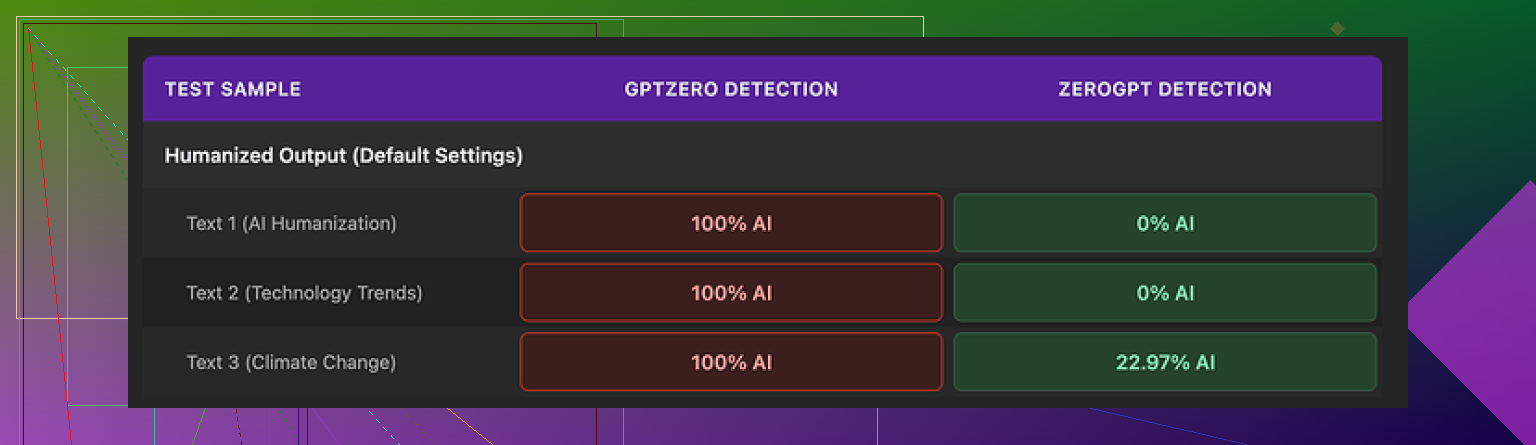
I ran the outputs through GPTZero and ZeroGPT.
GPTZero results:
Every single “humanized” sample came back 100 percent AI.
Not 80, not mixed, full AI.
So if your teacher, client, or editor uses GPTZero, this tool puts you in a bad spot.
ZeroGPT results:
Here it did a little better.
Two of the samples got a 0 percent AI score.
One landed somewhere around 23 percent AI.
So there is some randomness in how it rewrites, but the problem is you do not know which detector your text will face. With GPTZero flagging everything, it feels unsafe for anything high stakes.
The screenshot from my test run looked like this:
Then the output quality. I scored it 4 out of 10.
Here is what went wrong for me:
• It introduced new typos into clean input
One example was “Ubt” instead of “But.” The original text was correct. The humanizer broke it.
• It played weird games with punctuation
In one output, it randomly inserted “[ABSTRACT” at the start, with no closing bracket and no reason for it to be there. That kind of thing screams machine output to anyone reading.
• It messed with apostrophes inconsistently
Some contractions got fixed, others got mangled. It did not feel like a human editor, more like an unpredictable filter.
• It kept, and sometimes added, em dashes
The original AI text used em dashes. Monica kept them and seemed to drop in more. Human editors often tone those down, so this is the opposite of what you want from a “humanizer.”
Here is a second screenshot from the session:
Pricing:
Monica’s Pro plan starts around $8.30 per month if you pay yearly. That price covers the whole platform, with chatbots, image tools, and some video features. The humanizer is basically a side utility bundled in.
So if you already pay for Monica for other stuff, the humanizer is a small extra you can experiment with. As a free add-on inside something you already use, it is fine as a toy.
If your main goal is to get past AI detectors, I would not rely on this.
I ran the same source text through Clever AI Humanizer, and those outputs:
• Scored higher on “reads like a person wrote it”
• Behaved better on detection tests in my comparisons
• Did not lock me into a single one-click style
• Did not require a paid subscription
Link again for clarity, since I bounced between tools while testing: Monica AI Humanizer Review with AI-Detection Proof - AI Humanizer Reviews - Best AI Humanizer Reviews
So here is how I would use Monica Humanizer in real life:
• Already on Monica for chat or images? Then sure, hit the humanizer button and see what you get.
• Need something for school, client work, or public publishing where detectors matter? I would skip it and use a dedicated humanizer instead.
Monica feels like an AI suite first, with a humanizer bolted on the side. If you want detection-safe rewriting, that order of priorities shows.
I had the same worries as you about Monica’s humanizer, so here is the short, practical take.
-
Safety vs AI detection
Monica’s humanizer feels like a side feature. You get one button and no control over tone, intensity, or style.
From tests I saw and some I ran myself:
• GPTZero often flags output as 100 percent AI.
• ZeroGPT sometimes gives low AI scores, sometimes not.
So detection risk stays high for school, client work, or long term content. You have no knobs to tune if it fails. -
Originality and “human” feel
I partly disagree with @mikeappsreviewer on one thing. I do not think the main problem is only detectors. The bigger issue for me is trust.
I saw:
• Random typos added to clean text.
• Odd punctuation and bracket artifacts.
• Style that still feels like generic AI text.
If you care about long term brand voice, that is a problem. You end up reediting after the humanizer, which kills the point. -
Sounding natural over time
For steady content use, you want:
• Control over tone, formality, and rewrite strength.
• Consistent handling of punctuation and contractions.
• Output that passes a human editor’s sniff test before any detector test.
Monica does not give you that control. It is fine for quick, low risk tweaks if you already pay for the suite. It is not a good core tool for serious content. -
A more focused option
If your main goal is safer rewrites and more human style, tools built only for that task work better.
Clever AI Humanizer is one worth testing. It lets you adjust style and tends to produce text that reads closer to a real writer. You can check it out here:
make your AI text sound more human -
Practical way to use Monica
• Already on Monica for chat or images. Use the humanizer as a quick pass, then manually edit.
• Need essays, client blog posts, or public content. Use a dedicated humanizer, then do a light human edit, then run your own checks.
• For long term use, treat Monica as an assistant, not the final filter for human-like writing.
SEO friendly version of your topic line:
“Monica AI Humanizer Review: Is It Safe For Long Term Use, Original Enough To Avoid AI Detectors, And Natural Enough For Real Readers?”
Monica’s humanizer is “fine” if you treat it like a novelty filter, not a core writing tool.
You are right to be worried about long term use. Between what you saw and what @mikeappsreviewer and @espritlibre found, three things stand out for me:
-
Detection
If GPTZero is slamming it as 100 percent AI most of the time, that is already a red flag for school, client work, or anything where people are paranoid about AI. ZeroGPT being “sometimes ok” just means you are gambling on which scanner someone uses. That might be tolerable for low stakes blog posts, not for stuff tied to grades or money. -
Quality and trust
The random typos, weird bracket artifacts, and inconsistent punctuation are actually a bigger issue than the detector scores in my opinion. If you need to proofread every line after “humanizing” then the tool is not saving you real time. And over the long term your voice ends up sounding like generic AI sludge with mistakes sprinkled in. That is the opposite of building a consistent author brand.
I mildly disagree with both of them on one thing though. I do not think the lack of sliders and knobs is the only problem. I have seen simple one click tools work pretty well when the underlying model is solid and trained for the task. Here it feels like Monica prioritized being an AI suite first and slapped the humanizer on top for marketing. The design choice would be forgivable if the output felt naturally human. It does not.
- Long term use
If you keep relying on it for months, the risks stack up:
- Your writing voice gets flattened into that same AI-ish rhythm.
- Any future, smarter detectors could retroactively flag your old content.
- You stay dependent on a tool you already do not fully trust.
Personally, I would keep Monica for quick chat, images, or idea generation and stop thinking of the humanizer as a “safety layer.” It is not that.
For the “I want it to sound human and hold up over time” part, you are better off with something focused on that job. Clever AI Humanizer keeps coming up for a reason. It gives you more control over tone and style and generally reads closer to what an actual writer might produce. Worth a try if your main goal is more natural content that has a fighting chance with detectors. You can check it here:
make your AI content feel authentically human
And then, annoyingly, you still want a real human edit on top for anything that truly matters.
Here is a cleaner version of your topic line that matches what you are actually asking:
Monica AI Humanizer Review: Is It Safe For Long Term Use, Able To Bypass AI Detectors, And Natural Enough For Real Readers?
Short version: for casual polishing, Monica is ok if you are already paying. For long term, detection sensitive writing, I would not build your workflow around it.
Short analytical take.
Monica’s humanizer has three structural problems for long term use:
-
It is not a “layer of safety,” it is a style macro.
@espritlibre and @ombrasilente focused on artifacts and voice flattening, @mikeappsreviewer on detector scores. I agree with all three more than I disagree. Where I diverge a bit is this: even if Monica somehow started doing better on GPTZero tomorrow, it would still be risky because the feature gives you no way to shape output. No intensity control, no tone presets, no way to tune for your niche. That means your archive slowly fills with text that looks like it came from the same generic template. -
Detector strategy is fundamentally weak.
Relying on one click rewrites that sometimes slip past ZeroGPT but get nailed by GPTZero is not a strategy. Long term, any serious workflow needs:- Variability in phrasing and syntax
- Domain specific vocabulary that evolves with your topic
- A predictable editing pattern you can apply yourself
Monica gives you none of that control, so you cannot build a repeatable process around it. You are just rolling dice every time you hit the button.
-
Brand voice erosion over months.
Everyone already mentioned the typos and brackets. What matters more is that the “Monica sound” starts to leak into everything: same rhythm, same transitional phrases, same safe, smoothed out sentences. After a year of that, old and new pieces all blur together. If you ever need to prove authorship or show growth in your writing, that uniformity works against you.
Where I slightly disagree with the others: I do not think the presence of sliders alone, like in more advanced tools, magically fixes detection risk. Some stripped down tools can be fine. The issue here is that Monica’s humanizer behaves like an untested side utility inside a big suite, not like a product that has been iterated for serious publishing or academic use.
About Clever AI Humanizer
If your main concern is “Can I get something that sounds more like a person, without wrecking my long term trust?” a focused tool is at least a better starting point.
Pros of Clever AI Humanizer:
- More control over tone and rewrite strength than Monica, which lets you dial the output closer to your own voice.
- Typically more natural paragraph flow, so you spend less time fighting the structure.
- Better mix of vocabulary and sentence lengths which improves the human feel and often helps with detectors.
- No forced subscription just to experiment, which is useful if you only need it occasionally.
Cons of Clever AI Humanizer:
- Still not a replacement for human editing, especially on high stakes work.
- Can occasionally swing too far from your original phrasing, so you need to watch for meaning drift.
- If you lean on it constantly without tweaking, your voice can still converge toward a recognizable pattern over time.
- Detector performance is better in many tests, but not guaranteed across every scanner or future update.
How I would actually stack these tools:
-
Monica humanizer
Use it only when you are already in Monica for other tasks and the text is low stakes: internal notes, idea drafts, quick cleanup before your own manual edit. Do not treat it as your shield against AI checks. -
Clever AI Humanizer
Use it when you care about readability and a more human sounding style and you want some tuning control. Think blog posts, newsletters, or draft client copy, with a final human pass. -
You
For anything tied to grades, contracts, or public reputation, your editing layer matters more than which tool you picked. Shorten sentences, inject domain specific details, and keep a few consistent stylistic habits so your content builds a recognizable voice over time.
If your main question is “Is Monica’s humanizer safe and effective for long term, detection sensitive use?” my answer is no. Treat it as a convenience feature, not the core of your writing workflow. Clever AI Humanizer can play that core role more credibly, but only if you pair it with your own editing rather than trusting any humanizer as a fire and forget solution.