I’m looking for recommendations on the most reliable serial over Ethernet solutions for connecting legacy devices to my network. I’ve tried a couple of cheap adapters, but I keep running into connection drops and compatibility problems. I really need something stable that just works—does anyone have experience with dependable brands or specific models that are easy to set up and manage?
Plugging a Serial Port Into the 21st Century: Here’s What Actually Worked
Alright, so if you’re banging your head against the wall searching for a solution to hook up a serial device over your network, you’re not alone. I lost a good chunk of my Thursday night crawling through forums, old GitHub issues, and half-baked scripts that broke more than they helped. Half the so-called “solutions” needed you to compile something obscure, pay for a pricey industrial gateway, or — classic move — pray that serial-to-USB cheese you found in a drawer still functioned. Spoiler: it doesn’t.
After too many dead ends, I stumbled onto something decent: Serial over Ethernet. No fluff — this actually does what it says.
The Short Route: Don’t Overthink It
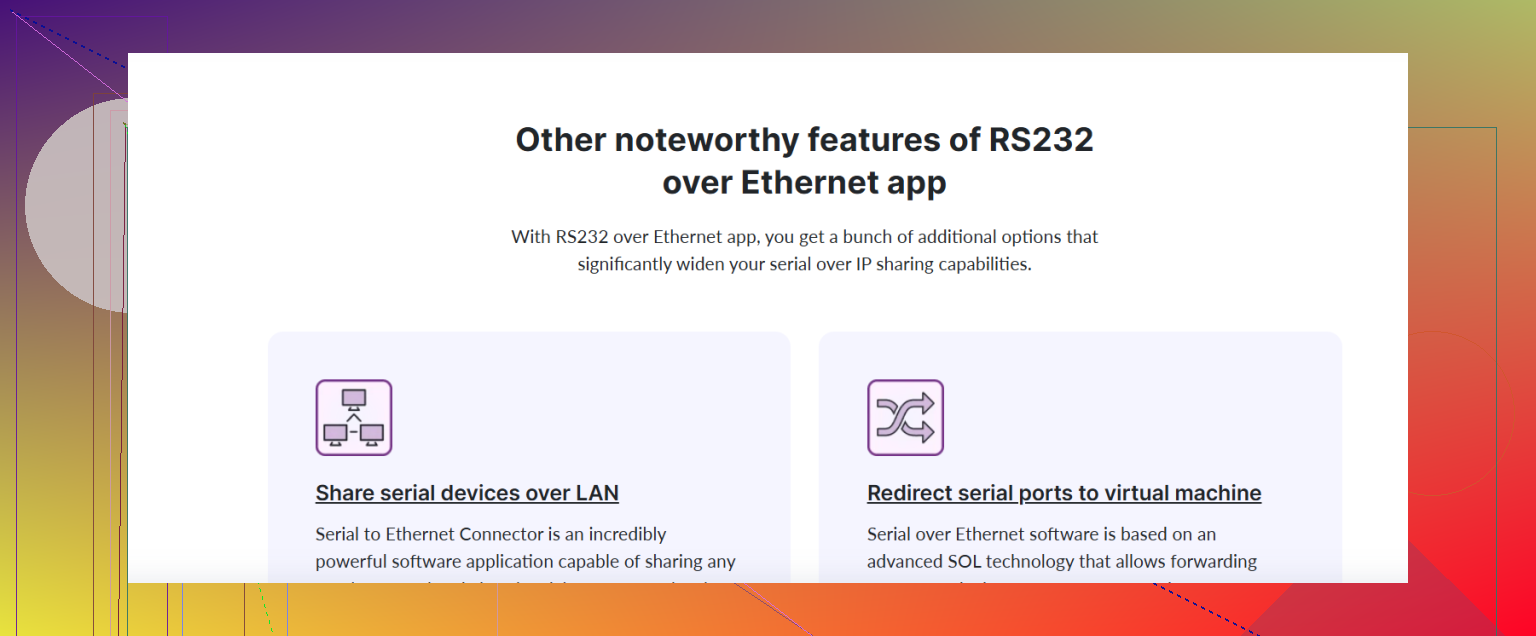
You know that feeling when tech dudes start pitching you on building your own DIY “bridge” with a Raspberry Pi, three adapters, and a hope that you never need to reboot? Don’t bother. With this app, you spin up a virtual port, toss it onto your network, and voilà — any other machine talks to it just like it was wired up right there. Legit made my old CNC machine feel like it’s got WiFi.
If You’re Tired of Serial Headaches
You can sling your physical serial port across the network without a PhD in driver management. Feels like cheating, but it’s so much easier than what I was prepping for. Plug in your cable, pick the port, set up the sharing, and boom — remote apps recognize it like local hardware. No registry hacks, no dark magic.
Not Everything Needs to Be Reinvented
Honestly, sometimes the “easy” solutions are the actual best ones. I wasted hours tinkering and un-tinkering, and this tool just works. Here’s the link for folks who are done playing serial port whack-a-mole: Serial over Ethernet.
You’re welcome, and may your embedded consoles never hiccup again.
Here’s my take: Physical serial to ethernet hardware boxes are still king for long-term reliability, especially if you’re running mission-critical legacy gear. I get where @mikeappsreviewer is coming from with the software-based ‘just make my serial port show up on my network’ angle—and yeah, it’s awesome if you just want something working now, without a hardware hunt. But in my experience? Windows updates, network hiccups, or anything that goes sideways on your host PC can still creep in and wreck your day if you’re not careful.
Try something like the Digi One SP or the Lantronix UDS1100 if you want bulletproof performance. They’re made for picky old-school industrial equipment and will generally shrug off anything your network throws at them. Yes, they’re pricier than bargain-bin adapters, but you get true hardware-level stability—no more dropouts or random ‘not detected’ nightmares.
That said, if you’re cool with a software approach and don’t want more gadgets cluttering the rack, I’d give unlocking remote serial device access via something like Serial to Ethernet Connector an honest look. I tested it with a POS system from the early 2000s that has no business still being online in 2024, and it worked better than most of the random adapters I tried, especially for stuff that lives deep in a server closet.
Bottom line: If you want fire-and-forget hardware, go with a legit serial-to-Ethernet box from a known brand like Digi or Lantronix. If you’re less worried about pure uptime and want easy setup, software tools like Serial to Ethernet Connector are shockingly painless and a great value. If people try to convince you a $6 USB-to-serial dongle and a wish.co.uk account will do the trick…well, let’s just say I’ve got some “gently used” graveyard adapters for sale.
Honestly, after reading through the tales of woe (and the rare happy ending) from @mikeappsreviewer and @sterrenkijker, I’m not convinced there’s a one-size-fits-everything silver bullet here—but I guess that’s the fun of dealing with old serial gear, right? Since everyone’s already tossed out the hardware classics (Digi, Lantronix, etc.) and sung the praises of Serial to Ethernet Connector, I’ll toss in my two cents from the trenches.
**Straight up: If reliability is your #1 metric because you’re running, say, a hospital imaging machine or a 20-year-old PLC that controls HVAC for an entire building, yeah—go with dedicated hardware (Digi’s stuff is like the Nokia brick phone of serial networking; it just won’t die). Those are built to be left in a dusty rack for decades with zero maintenance. Cheap-o adaptors are basically “break me and make you cry” kits.
BUT…for most office gear or “nice-to-have online” serial devices, Serial to Ethernet Connector is honestly leagues better than the sketchtools floating around (I tried ser2net on my Pi and it’s a fun science experiment until it’s not). The Windows solution literally had me up in five minutes with a 2002 label printer. No driver voodoo, and I haven’t seen any dropouts after weeks of leaving stuff idling.
I would NOT bet my 24/7 hard-requirement on any host-based tool—Windows updates, random reboots, you know the drill. But for 90% of everyday use? It’s cheap, convenient, and kind of shockingly stable. For folks that want to dive in, get up and running with Serial to Ethernet Connector.
One thing the other folks didn’t mention: Watch out for firewall chaos. Windows loves to block weird traffic between local and remote COM ports, so do yourself a favor and test with firewall OFF first, then restrict once you know it’s working. Also, life’s too short to debug cheap converters—if you want drama, watch reality TV, don’t inflict it on your RS-232.
TL;DR – If you want “set it and forget it,” buy a Digi or Lantronix. If you want “set it up now, works on everything, and don’t mind a PC in the middle,” Serial to Ethernet Connector is basically hassle-free. Just, please, don’t trust those $10 eBay dongles unless you hate yourself.
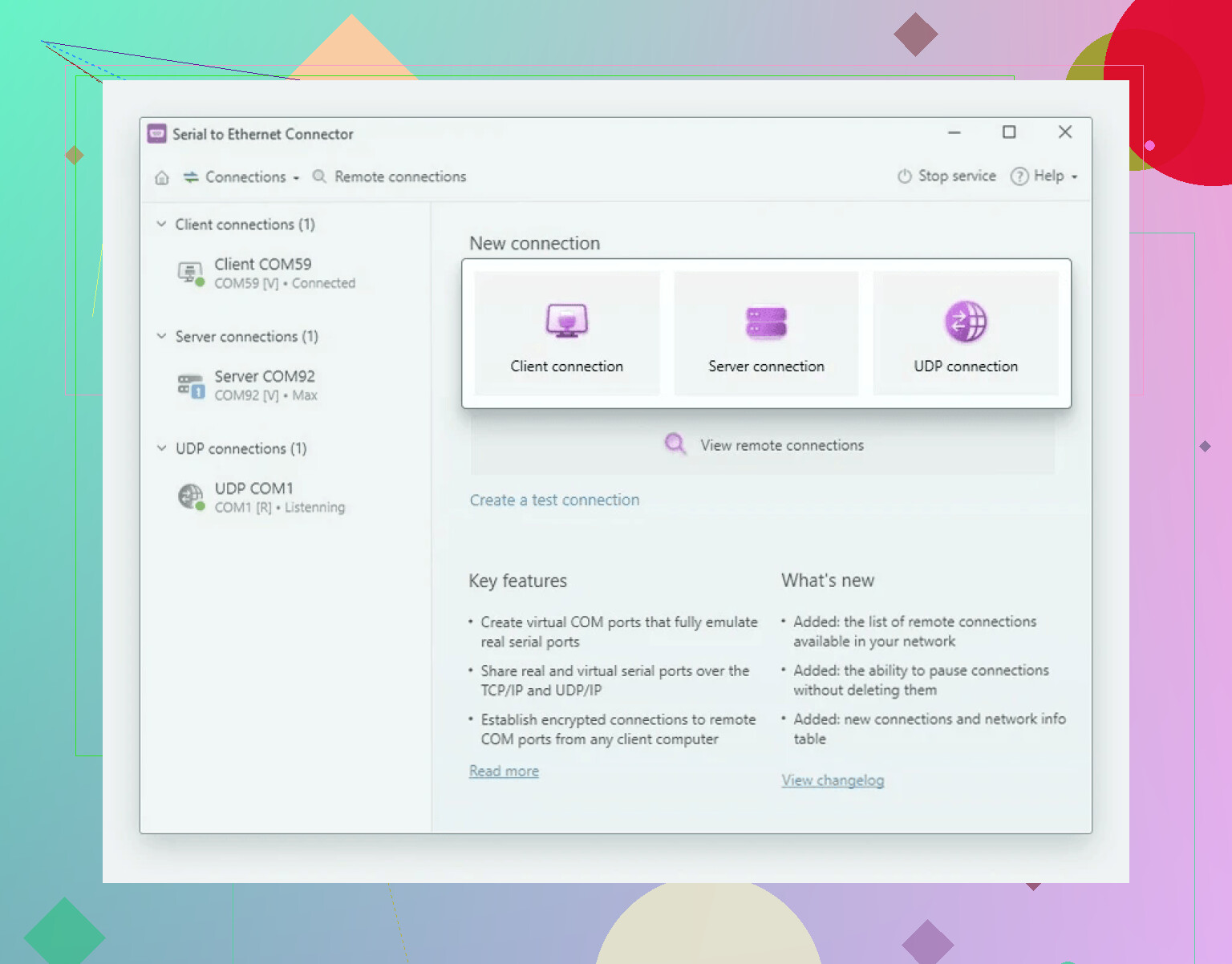
Let’s cut through the cable clutter—the Digi and Lantronix crew pretty much have the industrial, bolt-to-the-wall niche cornered, and while I get the love for solid-state “install-and-forget” boxes, sometimes you just want speed and simplicity. Serial to Ethernet Connector is weirdly refreshing there: it doesn’t need you to go full network admin, and it’ll virtualize a COM port with almost no effort. Want to slap your old label printer or a weather station onto the network? This does it without making you scream at Windows’ device manager.
Pros: Quick setup, supports a bunch of OSes, works shockingly well for finicky hardware, and lets you skip shelling out hundreds for rackmount hardware if you just need to bridge a couple ports. The UI’s not 90s ugly either (thank gods).
Cons: Still needs a stable PC in-between, so don’t trust it for mission-critical, lights-out data logging—use a hardware box or you’ll be cursing at forced Windows updates at 3 AM. If you’re running Linux across the board, it’s not as slick as ser2net for hardcore tweaking. And yes, you might have to convince your IT overlords to loosen the firewall grip.
TL;DR: For most folks who want results fast, Serial to Ethernet Connector just works, but if you’re running 24/7 hospital infrastructure? Play it safe and budget for a ruggedized box like the Digi gear @sterrenkijker mentioned. For everything else? The middle path isn’t half bad.